Book review: The Art of Diablo III
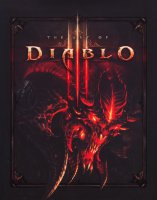
I love the Diablo videogame series. I've easily poured in hundreds of hours on each title, both when they came out and afterwards, as I'm now using DevilutionX to play the original Diablo under Linux, Diablo 2 Resurrected on PC/Windows, and Diablo 3 on Nintendo Switch. Each of them has its unique flavour, but I've come to the conclusion that Diablo 3 is the most varied and entertaining one, and visually also the one not only most pleasing but also richer in dungeon and monster themes.
At a bit above 200 pages, The Art of Diablo III was a pleasant surprise. I was expecting an average art book, with a mixture of some cool but other mundane drawings, and instead the book contains an amazing selection. The videogame graphicsare excellent, and it looks gorgeous despite being in 3D, zoomed out and already more than 10 years old. But then, you see the sketches and coloured drawings of the cultists, the beastmen, the demons, even the money goblins... and it is a new level of quality. I'd like to print some of the pictures, if that serves as a measure. There are a few 3D screenshots, and small paragraphs of explanatory text, but mostly you get what you'd expect: drawings, concepts and sketches.
I know I'm biased, but to see different concept sketches of Diablo, the characters and even some of the backgrounds, is just great. Pretty much everything is around the quality of The Art of Blizzard Entertainment. If you like the game as much as I do, this is a great piece of art to collect.
Book review: The Art of Tom Clancy's The Division
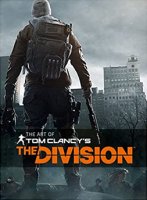
I recently read The Art of Tom Clancy's The Division because I'm playing the game from time to time; I got it for free a while ago and, despite initially discarding it, the truth is that, reality aside (even the most basic enemies are bullet-sponges), it is an entertaining shooter-looter (with tiny bits of RPG elements) and the setting and visuals is really great (and yes, the virus outbreak and "fighting against it" idea is one way for me to cope with our still ongoing pandemic).
And that's why I decided to grab the art book. A bit below 200 pages, with heavy graphical content and not much text (sometimes with terrible contrast, making it hard to read!), it is an amazing gallery of not only the final game locations, enemies and player clothing (there are tons of customization options), but also shows sketches, different iterations and discarded ideas both for characters and scenarios.
I am biased as I tend to love these kind of books, even for games that initially you'd think are not such a big deal, but one thing that Ubi Soft does really well is crafting incredibly detailed and ultra-realistic settings for their games. So much that they feel "more real than reality". The game is so full of details that I often stop to appreciate them before getting back into action. And with this book, you can get a bunch of nice examples without fear of getting killed by an enemy 😆
Book review: Dark Imperium
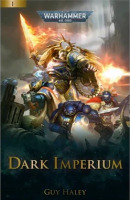
Dark Imperium is one of the first books based on the apparent new millennium (although not yet confirmed anywhere), where the Primaris Space Marines have already been created and are on their way to join (or should I say slowly replace?) their "classic" brothers, Roboute Guilliman is back and fighting chaos forces. While not the first primarch to return, it is the first loyal one to come. He feels a bit obsessed with his grim brother Mortarion, probably because of the attacks on Ultramar, but also seems to be quite impacted by what he's seen everywhere, from how the imperium survives to how the emperor "remains".
I didn't knew what to expect, if a quick sell of the Primaris and Death Guard miniatures range or new lore and maybe, just maybe, some tiny steps of the story moving forward in the 40k universe. And, while not incredible, it delivers. Hints to the emperor having lost any bit of humanity (if he had some actual care for people at all in the past), mentions on the maybe not so "legal" origins of the new space marines and Belisarius Crawl, surprise and disgust about the current state of affairs everywhere in the empire of man (will we see changes in the future?), even traces of disgust in Marneus Calgar's thoughts of his primarch's comeback. Plus of course some battles, just not anything incredible. I enjoyed more the intrigue fragments than the actual action segments.
An interesting read, I would check the synopsis before reading more books (in theory it's a trilogy) to confirm it's still appealing but not bad for "a new era".
Book review: Red Mars
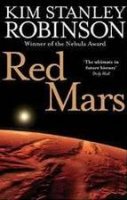
Red Mars, from Kim Stanley Robinson, is the first part of the Mars Trilogy, and as you might guess by the title, it tells a long story about the colonization and terraforming of Mars.
I've read numerous times about the books, sometimes with great praise, others less favourable, but in general it is considered a good source for fiction regarding theories about how to sustain life on Mars and in general how it would be to live there. So I decided to give it a try. And... while it is true that the ideas are very nice, the book bore me too much so as to not continue with the trilogy after finishing this first volume.
The scientific (fiction) is cool, really cool. Lots of ideas of what would be needed to sustain life, of how would humanity progressively prepare settlements and cities, and build diplomatic structures, and handle Earth problems, and their own ones. Don't want to get into details because I think the book is better enjoyed not knowing too much, just reading and discovering. But it also spends too much time on the human relations part. Maybe it's just me, but there are too many pages about conversations, about "characters thinking", meanwhile almost nothing happens. And then, all of a sudden "a few weeks later", a "a few months passed"... I was expecting either more detailed descriptions of the surroundings, of the actions, or just more events happening, but instead you get half of a book dedicated to relations between humans, true that almost all at another planet, but still, more about sociology than science.
It is a big book, and there are quite a few relevant "situations", so if you're patient things progress and unfold and new changes arise, but almost everything feels too slowly paced to my liking.
Book review: Building Big
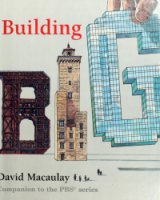
Building Big by David Macaulay it's a 190 pages entertaining title about huge human constructions, from bridges, tunnels and dams, to domes and skyscrapers. Combining explicative illustrations with easily understandable descriptions, you will learn some building secrets, from why steel pillars are I-shaped to how many different methods of constructing a bridge exist.
The images are very well chosen to give you the proper context and/or represent critical diagrams, the text never gets too dense but also never feels short of important points, and I cannot really complain about anything.
- ← Newer Articles Page 5 / 18 Older Articles →